If You Loved ACOTAR, Read This Next
By Sera VossSci Fi Romance Author

If you loved A Court of Thorns and Roses, read The Starfall Accord by Sera Voss next. It delivers the same slow burn enemies to lovers tension, a morally gray hero, and an all consuming world, reset in a human only space opera with a complete standalone happily ever after and no cliffhanger.
The one difference worth knowing first: it is a closed door romance, so the heat lives in the tension rather than on the page.
You finished it. You closed the book, stared at the ceiling, and felt the specific kind of empty that only happens when a series held your entire nervous system hostage for days.
That feeling has a name. It is called a book hangover, and it is the unmistakable sign you found a story that worked.
Nothing sounds good now. You have tried three other books and made it ten pages into each one before putting it down.
The characters felt flat and the stakes felt small and your brain kept whispering but it is not the same.
It is not going to be the same.
But it can be that good again, in a way you are not expecting. If you came here after Rebecca Yarros broke you the same way, Fourth Wing but in space is the matched read to queue next.
The book itself is The Starfall Accord by Sera Voss. It is a slow burn enemies to lovers with a morally gray hero and a complete HEA with no cliffhanger, set on a warship instead of a faerie court.
The first three chapters are free, no email needed.
Read three chapters free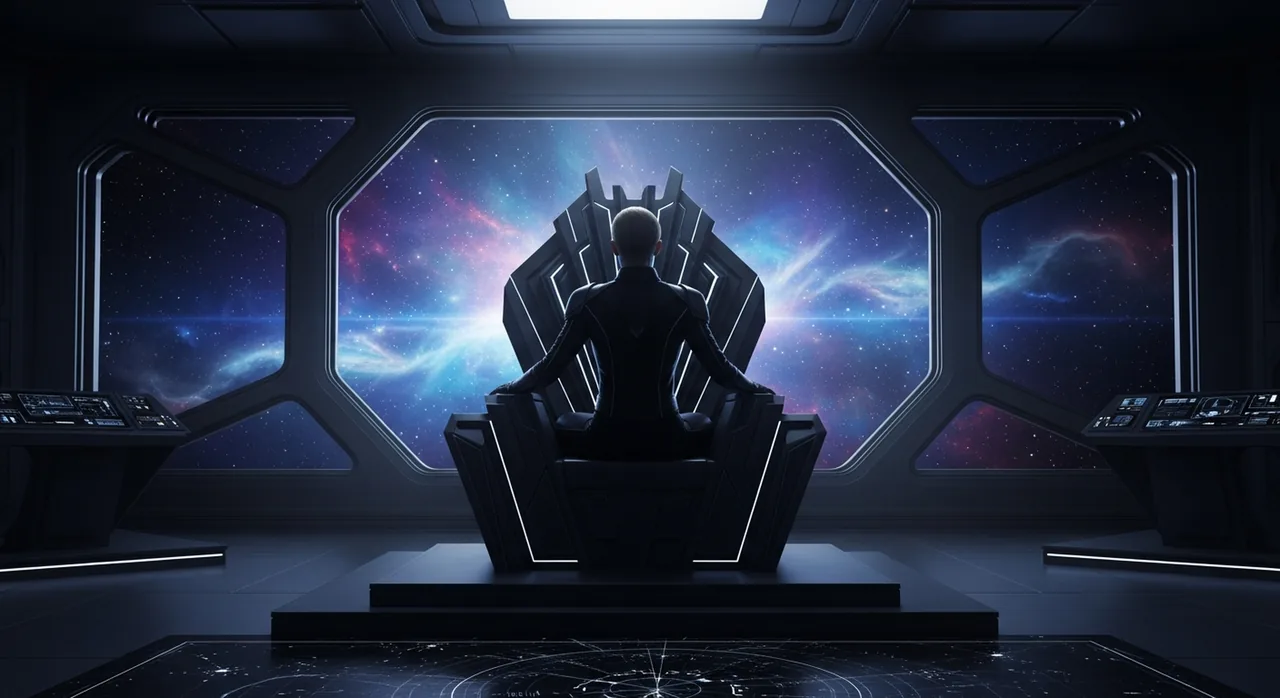
What You Actually Loved About ACOTAR (It Was Not the Fae)
Here is the thing nobody says out loud: you did not fall in love with the setting. You fell in love with the tension.
With the moment when the person who should be your enemy looks at you like you are the most dangerous thing in the room and the most necessary. With the slow, agonizing build where every interaction leaves a mark and nobody admits it.
You loved watching a heroine discover that the power inside her was always there, just buried under survival and grief and the belief that she was less than she is. You loved a morally gray hero who does terrible things for reasons that make your chest ache when you finally understand them.
The full morally grey archetype in romance breaks down why this character type works the way it does. And you loved the feeling of being swallowed by a world so complete that reality felt thin when you looked up from the page.
Those are not details specific to one series. They are the bones of the story your nervous system craves, and they exist elsewhere, in a setting that will catch you completely off guard.
Where to Find It Again: The Starfall Accord, a Slow Burn in Space
Deep space.
Not the sterile, clinical version.
The kind of deep space where ships groan under pressure and corridors hold secrets and the void outside the viewport mirrors the void between two people who refuse to say what they mean.
The Starfall Accord was built on exactly the framework your body is missing.
Enemies to lovers. The real kind, where the hatred is specific and personal and rooted in something that happened before the story begins.
Two people on one warship with nowhere to go. The forced proximity in space is structural, not decorative. The shift from antagonism to something else is not a switch that flips; it is a fracture that spreads so slowly you do not notice until you are already on the other side.
A heroine who does not start powerful. She starts cornered, making impossible decisions with incomplete information, and every choice costs her something.
The power comes later, and when it does it does not look like a gift. It looks like a reckoning.
A hero who operates in the space between right and wrong so naturally that you stop trying to categorize him and start trying to understand him instead. The kind of character who makes you uncomfortable because you agree with him more often than you should.
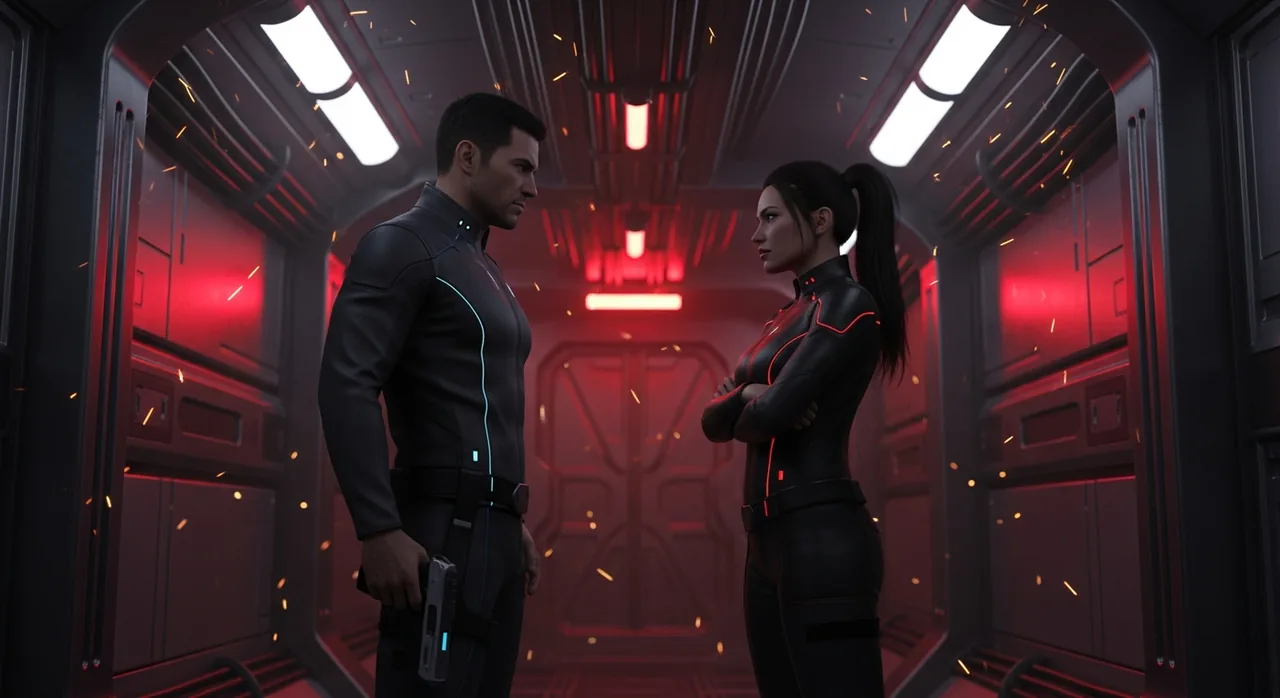
And the world is not backdrop; it is a character. The political structures, the alliances that shift like gravity, the sense that every room holds a history you are only beginning to understand.
The crew that shares the ship is part of this world too. The found family dynamic runs underneath the enemies to lovers arc the whole way through.
You will find yourself thinking about the ship's layout when you are supposed to be sleeping.
The dual POV means you feel both sides of the fall.
You know what he is hiding before she does.
You watch her resist something you can already see is inevitable.
The tension lives in the gap between their chapters, in the words they almost say, in the gestures they pull back at the last second.
It is a slow burn. The kind that earns the word burn.
One Difference Worth Naming: Closed Door, Not Open Door
ACOTAR does not close the door. Starfall does, which makes it a closed door romance.
That is not a downgrade. It is a different instrument playing the same note.
Where ACOTAR lets the physical moment land explicitly, The Starfall Accord builds so much pressure in the approach that when the door closes, you feel every bit of it in what is left unsaid.
The tension is not resolved. It is concentrated.
Readers who prefer their romance without explicit content get a story that earns every inch of emotional devastation through restraint.
If you loved ACOTAR partly for its heat level, that specific thing will not be here. Everything else (the morally gray hero, the enemies to lovers fracture, the world that swallows you, the slow burn that costs both of them) is all here, undiluted.
It is a trade worth knowing about before you start. It is not a trade that costs the story anything.
Read the First Three Chapters FreeYou Already Know If This Is the One
You are not here because you want a recommendation list. You are here because you want one book, the right one, the one that makes you cancel plans and read under the covers with your phone brightness turned all the way down.
You want to feel that thing again. The obsession.
The inability to stop thinking about two fictional people who have not figured out what you figured out three chapters ago.
The Starfall Accord is 90,000+ words of exactly that. Enemies to lovers, a slow burn that earns it, a morally gray hero who will ruin your standards, and a heroine who will make you want to be braver.
The HEA is not handed to anyone. It is fought for, page by page, right to the end, inside a world that will not let you go.
The fantasy is behind you. The stars are next.
If you are weighing the romantasy versus sci fi romance question, this is the crossover that answers it. For a wider shelf of gateway reads, the best space opera romance books list is the right next stop.
Some books fill the space another one left behind.
This is that book.
See the Book · $4.99Frequently asked questions
If I loved ACOTAR, what should I read next?
If you loved A Court of Thorns and Roses, read The Starfall Accord by Sera Voss next. It delivers the same slow burn enemies to lovers tension, a morally gray hero, and an all consuming world, reset in a human only space opera with a complete standalone happily ever after and no cliffhanger.
How is The Starfall Accord similar to ACOTAR?
It shares the bones readers actually loved: enemies to lovers tension that is specific and personal, a heroine who discovers the power inside her was always there, a morally gray hero who does terrible things for reasons that make your chest ache, dual POV so you feel both sides of the fall, and a world so complete it works as a character.
What is the one difference between ACOTAR and The Starfall Accord?
Heat level. ACOTAR does not close the door; The Starfall Accord does, so the pressure builds in the approach and lands in what is left unsaid rather than on the page. If you loved ACOTAR partly for its explicit heat, that specific thing will not be here. Everything else is undiluted.
Is The Starfall Accord a standalone?
Yes. It is a complete standalone with a guaranteed happily ever after and no cliffhanger, set on a warship instead of a faerie court.