Romance Glossary · by Sera Voss
What Is Space Opera? The Genre of Big Stakes and Bigger Feelings
Space opera is science fiction on an epic scale.
What defines it, where romance fits inside it, and why the scale makes the love story hit harder.
Last updated: 19 June 2026
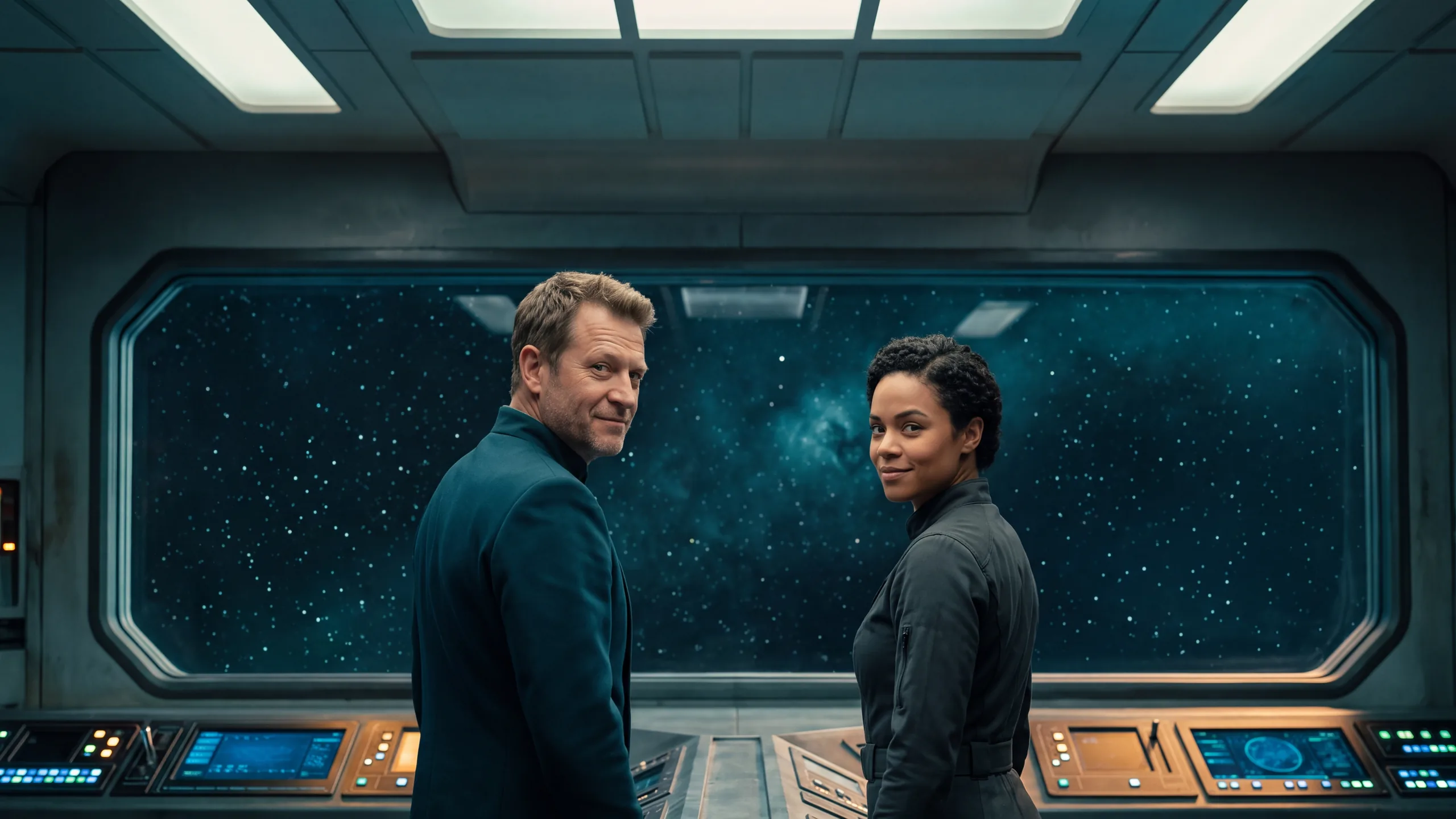
Space opera is a subgenre of science fiction set largely in space, defined by big stakes, sweeping conflict, and characters whose choices ripple across worlds.
The scale is the point. Wars, alliances and the fate of whole systems sit in the background of every private moment, which is why a love story set inside one hits so hard.
The name has nothing to do with music. Fan writer Wilson Tucker coined it in 1941 as a jab, modelled on soap opera and on horse opera, the 1930s phrase for a formulaic Western.
Space opera cares less about how the engine works and more about thrones, alliances, missions, and the human drama playing out against a galactic backdrop.
When that scale wraps around a love story, the feelings scale up with it.
Sera Voss puts a single slow burning relationship at the center of the storm in the full book and what is in it.
Step aboard for three chapters. No charge, and no email address collected.
Step aboard, three chaptersWhat Defines a Space Opera
A few things tend to mark a story as space opera:
- Scale. The stakes reach beyond the protagonists to ships, factions, colonies, or whole systems.
- Conflict. Politics, war, sabotage, or survival drive the plot forward.
- Character. Ensemble casts and strong personal arcs carry the weight, not technical detail.
- Setting. Space is not a backdrop you visit. It is where the story lives.
Put those together and you get adventure with consequence, where the personal and the political keep colliding.
Space Opera With the Romance at the Center: The Starfall Accord
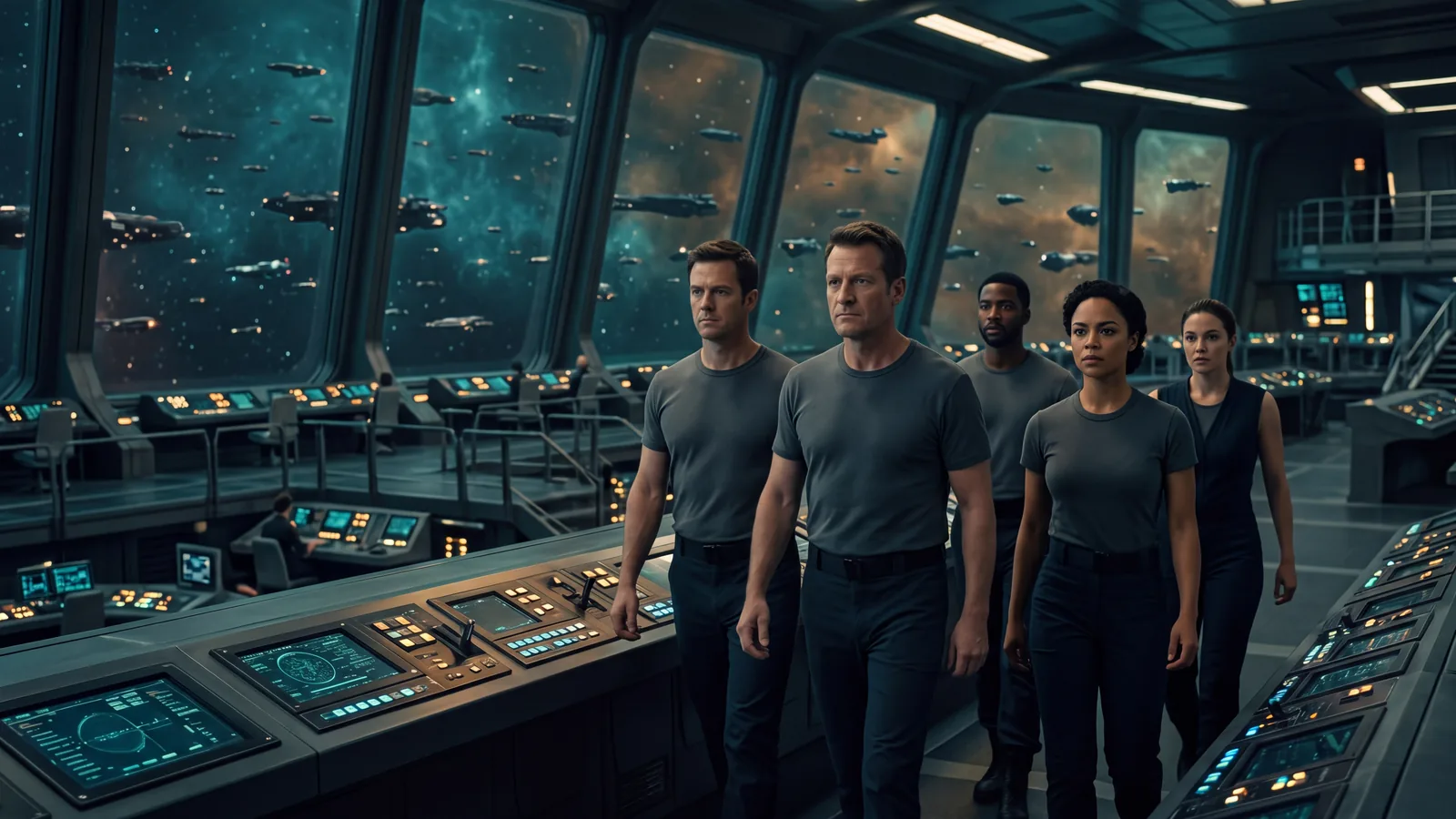
The Starfall Accord by Sera Voss puts a single relationship at the heart of a space opera crisis.
Commander Thane Aldric is trying to keep his crew alive. Coalition Liaison Kira Vasic is chasing down a saboteur aboard the ship, and she is not ready to hand him her trust.
The stakes are political and the danger is real, and all of it keeps forcing the two of them closer than either wants.
What the space opera scale delivers here:
- Political stakes big enough to press down on every private moment between the leads
- A chosen crew whose survival is tangled up in the central relationship
- A warship in crisis that pins two adversaries together with nowhere to retreat
- Two narrators, so the fourteen chapter build registers from inside each of them
- Human only with no aliens, closed door, and a happy ending that arrives inside this one book
Terms like this one are collected in the romance tropes list.
Board the ship at no costSera Voss makes the galaxy personal in the human only space opera behind all of this, narrowing a galaxy sized crisis down to two people who take turns telling it.
Everyone in it is human, with no aliens anywhere, and the intimacy stays behind a closed door.
One book, a full happy ending, and nothing dangling after it.
See the book · $4.99 USD · launching soonAustralian, EU and UK buyers see the exact GST or VAT inclusive price at checkout.
Frequently asked questions
What is space opera?
Space opera is a subgenre of science fiction set largely in space, defined by large scale stakes, sweeping conflict, and casts of characters whose choices ripple across worlds.
It prioritizes adventure, politics, and human drama over technical detail.
The opera in the name comes from soap opera and horse opera, and points to melodrama and scale rather than music.
What makes a story space opera rather than hard sci fi?
Hard science fiction centers technical and scientific accuracy.
Space opera centers scale, character, and conflict.
A space opera may include advanced technology, but it cares more about thrones, alliances, and the people caught between them than about how the engines work.
Is space opera the same as sci fi romance?
No, but they overlap.
Space opera describes the scale and setting.
Sci fi romance describes a story where the relationship is the core.
A space opera romance is both at once, an epic scale space setting with a central love story driving the book.
Ready to Fall Into the Stars?
Enemies. Allies. Something more. The Starfall Accord begins with a single, impossible truce.