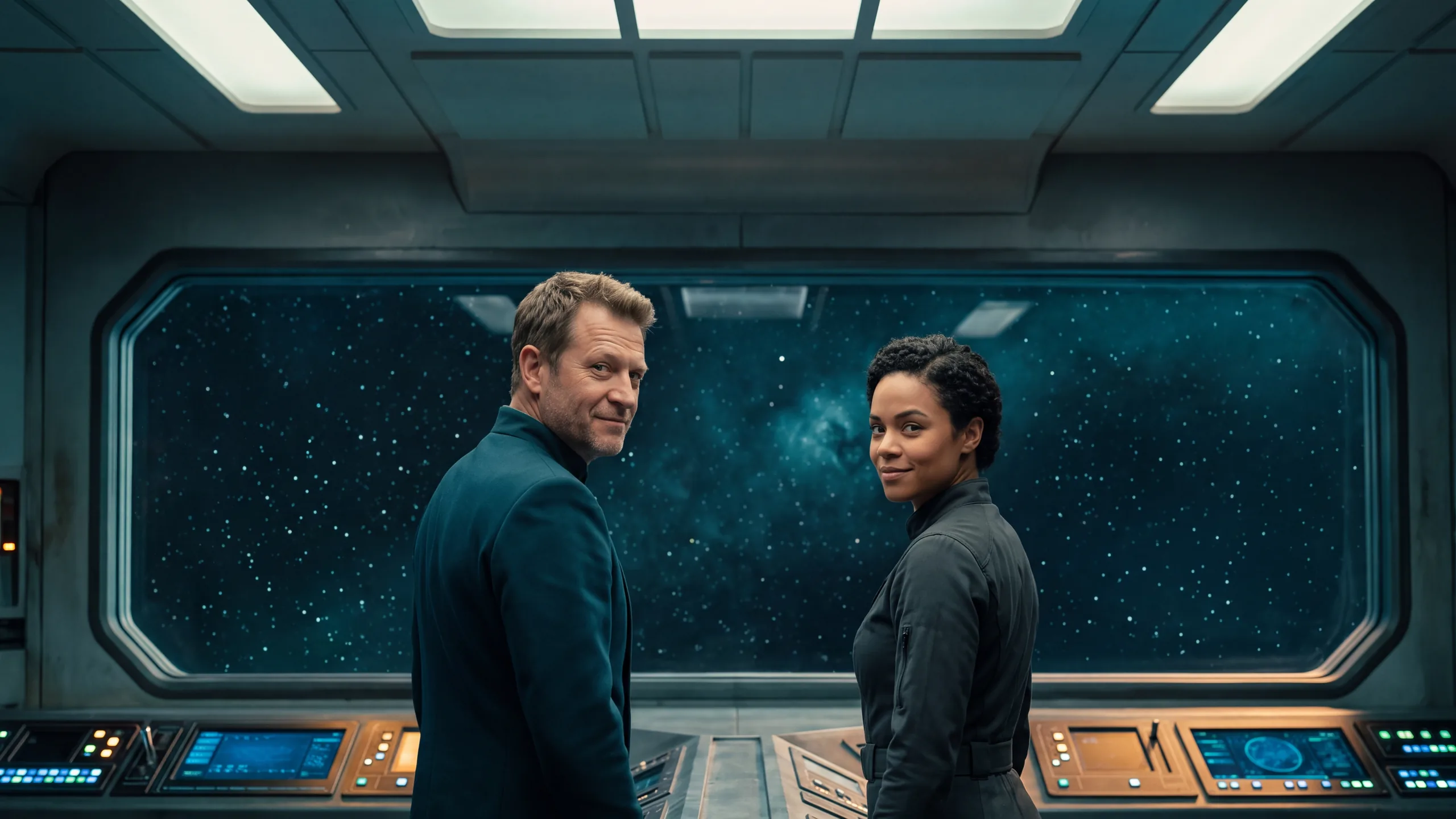
Romance Glossary · by Sera Voss
What Is Sci Fi Romance? The SFR Genre Explained for New Readers
Sci fi romance puts the relationship first and the stars second.
What the genre actually is, what to expect, and the easiest place to start reading.
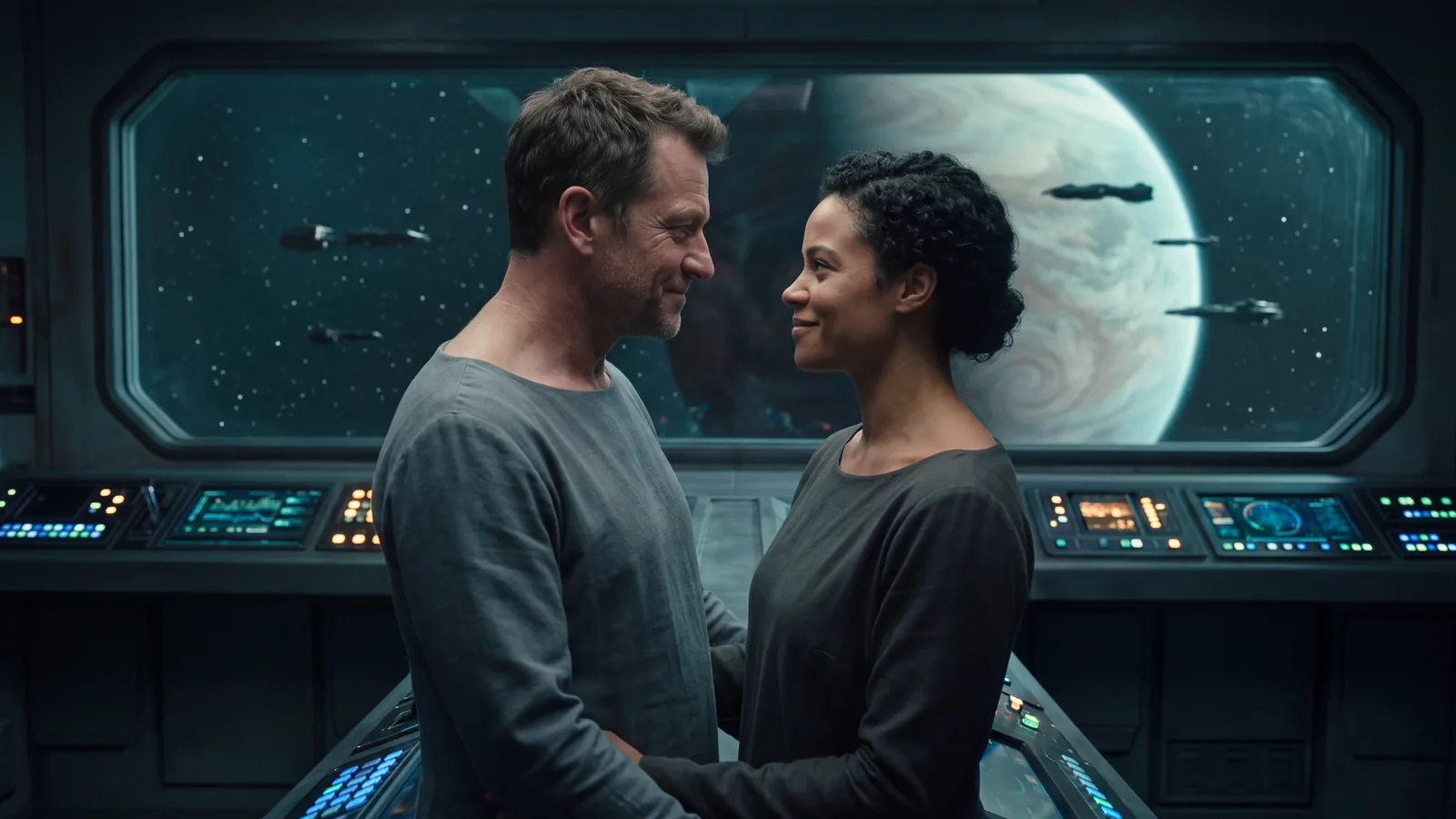
Last updated: 19 June 2026
Sci fi romance, or SFR (science fiction romance), is a genre where a central romantic relationship drives the story and a science fiction setting provides the world.
Romance first. Stars second.
The relationship is the point.
The technology, the ship, the political crisis are there to put pressure on the couple, not to deliver a physics lecture.
If you read for the feelings, SFR is built for you.
Sera Voss keeps the science light and the romance front and center in the human only space opera behind all of this, told in dual POV (both points of view).
Chapters one to three are yours at no cost, with no email gate in front of them.
Meet the genre in three chaptersWhat "Romance First" Actually Means
In sci fi romance, the relationship is the spine of the book.
Take the romance out and the story collapses. That is the test that separates SFR from science fiction with a love subplot.
The failing ship, the fragile alliance and the mission all exist to push two people together, pull them apart, and raise the cost of every choice.
If a book ends and you are thinking about the couple rather than the technology, it was sci fi romance.
The Easiest Place to Start: The Starfall Accord
The Starfall Accord by Sera Voss was designed as a first SFR for readers who came for the romance.
A fleet commander and the Coalition pilot sent aboard as liaison to assess him open the story as adversaries, pushed together by a shipboard crisis neither of them chose.
The science stays light.
The relationship stays central.
The dual POV (both points of view) lets you live inside both of them as the slow burn builds.
Why it works as an entry point:
- The relationship leads and the technology stays in the background where it belongs
- Human only with no aliens, so there is no dense worldbuilding to learn before you start
- Closed door, so the charge lives in restraint rather than in explicit scenes
- One book, one promised happy ending, so a newcomer can test the genre without committing to a series
The terms the genre uses are all defined in every trope term explained in one place.
When you are ready to browse beyond one book, the new sci fi romance releases guide tracks what the genre is publishing this year, with verified dates and stated heat levels.
Test the genre, three chaptersSci fi romance is a love story that uses the stars to raise the stakes.
Sera Voss does that in the book itself, a romance first SFR told in dual POV.
Where the enemies to lovers slow burn lands a full standalone HEA (a happily ever after) and never leaves you on a hook.
See the book · $4.99 USD · launching soonAustralian, EU and UK buyers see the exact GST or VAT inclusive price at checkout.
Frequently asked questions
What is sci fi romance?
Sci fi romance, often shortened to SFR, is a genre where a central romantic relationship drives the story and a science fiction setting provides the world.
The romance is the point, and the technology, space travel, or future stakes are the backdrop that puts pressure on the couple.
What does SFR stand for?
SFR stands for science fiction romance.
Readers use the abbreviation on Goodreads shelves, in reviews, and across BookTok.
It labels books that combine a science fiction setting with a central love story, where the romance is the emotional core and the science fiction is the world around it.
What is a good first sci fi romance to read?
A strong entry point keeps the technology light, the relationship central, and the story complete in one book.
A standalone with a guaranteed happy ending and no cliffhanger lets a new reader try the genre without committing to a long series.
Ready to Fall Into the Stars?
Enemies. Allies. Something more. The Starfall Accord begins with a single, impossible truce.